The Zugspitze (2962 meters) is Germany's highest mountain, located on the border with Austria. The Münchner Haus, the first building near the summit, was opened in 1897. In 1926, the first cable car, the Tiroler Zugspitzbahn, followed, now accommodating 101 passengers. The mountain features a restaurant, a museum, a viewing platform, and the iconic gipfelkreuz at the peak. The Zugspitze can be accessed via multiple routes, including the Tiroler Zugspitzbahn from Ehrwald and the Bayerische Zugspitzbahn from Garmisch-Partenkirchen, which also leads to the Nördliche and Südliche Schneeferner glaciers. The Nördliche Schneeferner, Germany's largest glacier, is used as a ski area but is threatened by climate change. Protective measures such as foil coverings have had little impact, and experts predict the glacier could disappear within 20 years. The weather station at the Münchner Haus was opened in 1900 and has since recorded detailed meteorological and atmospheric data, including records such as the lowest temperature of -35.6°C in 1940 and a wind speed of 335 km/h in 1985. The Zugspitze also hosts research into atmospheric chemistry and radioactivity using modern equipment like spectrometers.
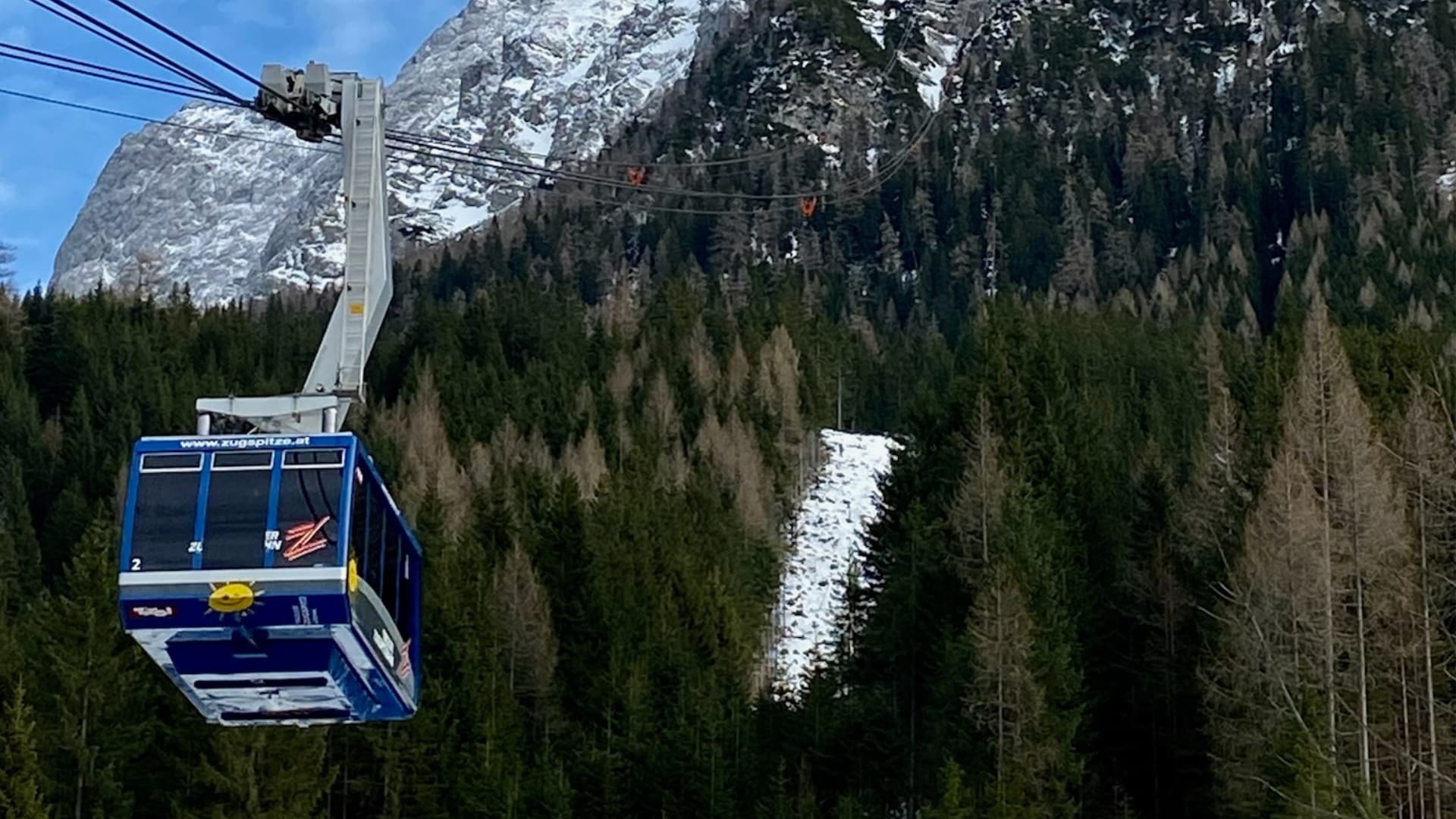
The gondel lift on the Tyrolean side of the mountain